
AI builder · GTM · Market intelligence

I build AI tools that solve commercial problems.

10+ years across GTM, growth, and market intelligence, now in AI Strategy and Market Intelligence at Siemens Energy. I've shipped a RAG assistant used by 12 BMW consultants, an expert knowledge co-pilot at 90 to 95% answer accuracy, and Wattlas, a live global energy-demand radar. Based in Leipzig, open to full-time roles and consulting work.

I like building things that teams can actually use.

Worked across
Siemens Energy
BMW Group
Bundesdruckerei
HHL Leipzig

What I build

04 domains
Selected work / proof
01

AI in real workflows

AI I have actually built, shipped, and measured - not just used.

100+ public data feeds · 197 countries · daily automated refresh.
Full story: Wattlas - global energy-demand radar

Working in Siemens Energy's condition-monitoring business, I kept running into the same strategic question: where will electricity demand grow next? Data centers and water infrastructure are the strongest forward signals, but the public data answering this is scattered across dozens of disconnected sources.

Build the tool I wished existed: one interactive global map showing where data-center and water-infrastructure growth may create electricity demand, opportunity, or risk from 2026 to 2031.

I built Wattlas as a side project in June 2026: Python data pipelines that pull, validate, and score data from 100+ public feeds (via APIs and webhooks), covering 3,000+ regions across 197 countries, 4,300+ demand facilities, and 53,000+ power generators - refreshed daily by an automated pipeline. The front end is Next.js with a clustered map, regional drill-downs, and full source provenance for every facility. I built it with agentic AI coding tools and deployed it via GitHub to Vercel.

Colleagues at Siemens Energy now use it regularly after I demoed it in meetings - a commercial question from my day job, turned into a shipped, live data product.

Read the full case study →

Adopted by 12 consultants · ~2-3 hrs/week saved each.
Full story: Grounded research assistant (RAG)

At BMW, knowledge was spread across 1,000+ internal documents. Finding the right answer often took too long, and people depended too much on knowing where the information might be.

Build an assistant that lets the team ask questions in plain language and get answers grounded in BMW's own content.

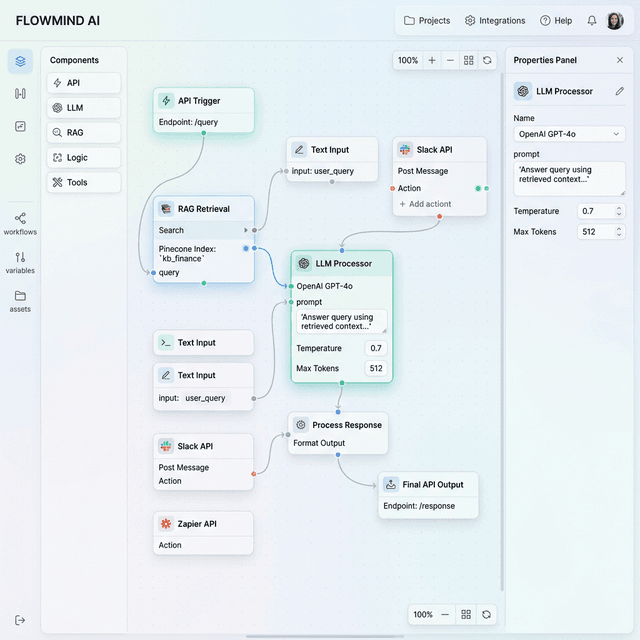
I self-initiated and built a RAG assistant on BMW's internal AI platform: I designed the data model, cleaned and structured the documents, built the chunking and retrieval logic, and added a fallback so the system avoids guessing when source material is weak. A core use case was playbook retrieval - describing a dealer's current challenge and instantly surfacing how dealers in other markets had solved a similar problem.

The assistant was adopted by 12 consultants across international markets, saving each around 2-3 hours per week, and localized versions were later rolled out to South Africa and Australia. I also ran a 3-hour enablement workshop for 15 attendees to drive adoption.

Note: BMW's internal system can't be shown. The visual is my own RAG work on Google Cloud.

Read the full case study →

Answer accuracy improved from ~80% to ~90-95%.
Full story: Expert knowledge co-pilot

At Siemens Energy, valuable product and process knowledge was spread across internal material and the experience of senior experts. Some colleagues were retiring after 20-30 years, creating a real risk of losing critical know-how - in one case, only a single person knew a core process end to end.

Make expert knowledge permanently accessible, so a new employee can effectively 'ask the expert' even after the expert is gone.

I built the assistant as a Microsoft Copilot agent grounded in the department's SharePoint, with source citation on every answer. I organized the document structure, categories, and metadata behind retrieval, and I capture retiring experts' knowledge through structured interviews - recording, transcribing, summarizing, and curating the highest-value knowledge into the system. I run monthly feedback cycles where teammates test the assistant against real questions.

Answer accuracy improved from roughly 80% at launch to around 90-95% today, measured through those feedback loops. The assistant now accelerates onboarding, removes single-person dependencies, and I'm pitching it to other Siemens Energy teams as a template for knowledge preservation.

Note: Visual is anonymized or recreated to protect confidential information.

Read the full case study →

Customer sentiment at scale, categorized automatically.
Full story: Review-mining AI agents

Real customer opinion is buried in thousands of scattered reviews: Gartner Peer Insights, G2, Trustpilot, Reddit, YouTube comments. Reading them manually doesn't scale, so most teams simply don't.

Turn qualitative customer listening into a repeatable, automated process instead of a one-off manual effort.

At Siemens Energy I set up AI agents that take a product page, review thread, or comment chain, read every entry, and categorize the content: pain points, feature requests, objections, buying triggers, and positive and negative themes in the customers' own language. The output feeds a competitor sentiment heat map used in positioning and roadmap discussions.

That internal version can't be shared, so I rebuilt the same method as a public, open-source tool: MarketGap Scout. It turns any coding agent into a market research analyst. Give it a product or market and it reads real opinions from Reddit, YouTube, and review sites, then hands back a report on market gaps and how to capitalize on them, with every claim backed by a real quote and a checked source link.

The same method later produced a winning ad angle for a real paid campaign (Nextbike, León): review mining surfaced that local buses stop at 10 pm in summer, which became one of our best-performing ad messages.

The screenshot shows the public repo. Full code and docs: github.com/ad1tyagupta/marketgap_scout

Read the full case study →

Transcript → summary → presentation, on autopilot.
Full story: Meeting intelligence automation

Like most corporate teams, we spent real time after meetings reviewing recordings, writing summaries, and turning outcomes into shareable slides - low-value work that AI can handle.

Eliminate the post-meeting overhead entirely with an automated pipeline.

Using Power Automate, I built an agent that automatically collects my meeting transcripts, summarizes them, and generates a presentation from the summarized content - a raw meeting recording becomes a shareable deck with no manual work in between.

Post-meeting documentation now runs on autopilot. It's a small build, but it shows the pattern I apply everywhere: find a recurring manual workflow, replace it with a monitored automation using the tools already available in the environment.

Concept workflow, not deployed inside Amazon.
Full story: Vendor ads workflow concept

Concept design (not built inside Amazon).

A friend working at Amazon shared a practical problem: many vendors underperform, and the process of offering them paid ad support is manual, slow, and difficult to scale.

Design a workflow that can automatically identify low-performing vendors, send them a clear campaign offer, and trigger the next steps if they accept.

We designed a concept where an Excel sheet tracks vendor sales, the workflow identifies the lowest-performing sellers, and those vendors automatically receive an email with a predefined campaign offer. If the vendor accepts, the system triggers the next steps: campaign setup, standard creative generation, and automatic replacement of product images and offer details inside a fixed ad template.

The idea turns a manual process into a repeatable workflow: the right vendors receive the right offer at the right time, and campaign setup becomes much faster and easier to scale.

Note: This is a concept workflow and was not deployed inside Amazon.

3-hour workshop for 15 at BMW · live workshop for ~25 at Siemens Energy.
Full story: AI adoption workshops

In many teams, AI tools exist before people really know how to use them. The gap is usually not access to AI - it is understanding where it actually helps in daily work.

Help teams move from “AI sounds interesting” to “AI can save me time on real tasks.”

At BMW, after building the RAG assistant, I ran a 3-hour workshop for 15 attendees to show how it could support consulting work - faster research and grounded first drafts for presentations. At Siemens Energy, I created a full Copilot usage playbook and delivered a live workshop to around 25 colleagues on how Microsoft Copilot supports daily work across Teams, Outlook, Word, Excel, and PowerPoint.

The workshops gave both teams practical use cases they could apply immediately and helped shift AI from an abstract topic into something useful in everyday work - the enablement pattern I've now repeated at three organizations.

Note: This card reflects real internal workshops delivered to BMW and Siemens Energy teams.

Local LLMs · model fine-tuning · open-source tools.
Full story: Personal AI lab

I treat AI capability as a skill to be built hands-on, not just used - so alongside work projects, I run a continuous personal learning track.

Understand how these systems actually work under the hood, well enough to build with them anywhere.

I run open-source LLMs fully offline via Docker (Llama- and Gemma-family models sized for consumer hardware). Through Google Cloud's AI/ML learning path, I'm fine-tuning an open-source vision model on public X-ray data - chosen because image-based anomaly detection transfers directly to industrial predictive maintenance. I've also published open-source tools on GitHub: LeadIn (a local lead-research app with relevance scoring and AI-personalized outreach) and ApplyAI (a fact-grounded job-application workspace for agentic coding tools).

Everything is public and verifiable on my GitHub - the technical credibility layer under the 'commercial operator who builds AI tools' positioning.

02

GTM & Market Intelligence

Strategy artifacts that turn research into decisions.

6 competitors · 50+ feature areas · 1,000+ sources.
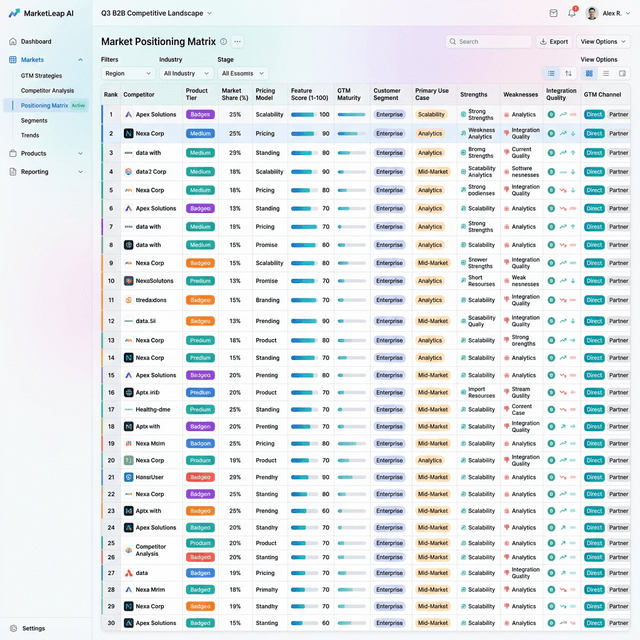
Full story: Competitive positioning teardown

At Siemens Energy, we needed a clearer view of how competing solutions position themselves in the market and what buyers are likely to compare us against.

Turn scattered competitor information into something the team could actually use for product messaging and GTM discussions.

I benchmarked 6 global competitors across 50+ feature areas using 1,000+ primary sources - product pages, manuals, webinars, and release notes - and organized the findings into a comparison structure around buyer-relevant themes like workflows, reporting, analytics, integrations, and usability. Instead of just listing features, I focused on what each competitor stands for, where the strongest differentiation signals are, and separated real capabilities from marketing claims.

The result was a product-market heat map that shaped positioning discussions, roadmap prioritization, and leadership decisions - and it's now refreshed continuously via my automated review-mining agents.

Note: Visual is anonymized / representative and does not show internal material.

From competitor pricing to a tiered SaaS model.
Full story: Pricing & packaging analysis

Industrial software is often sold in complex module structures that customers find hard to buy. Our platform had 15+ modules, while competitors packaged much more simply.

Understand how competitors price and package, and turn that into concrete commercial recommendations.

I analyzed global competitor pricing and packaging logic (asset-based vs. device-based models, service tiers, managed offerings), built revenue scenarios for a tiered Industrial SaaS offering, and mapped which capabilities competitors partner for instead of building - leading to structured build-vs-partner recommendations. I'm now supporting the simplification of the module structure itself.

The work moved the pricing conversation from intuition to evidence: clear tiers, upsell logic, and a packaging direction grounded in what the market actually buys.

Note: Visual is recreated with representative data; specifics are confidential.

Turn broad research into a clear shortlist.
Full story: Market entry prioritization

In a GTM strategy project with Bundesdruckerei, we had to evaluate a broad set of markets and decide where to focus first.

Turn a large research scope into a shortlist that stakeholders could understand, trust, and act on.

I helped build a prioritization approach using practical criteria such as market attractiveness, feasibility, complexity, and timing - filtering 190+ countries down to 5 entry markets with more than €20M potential each. I then translated the research into a ranked view with short reasoning for each recommendation, so the discussion stayed commercial and decision-focused instead of becoming a long research dump.

The final output made it easier to align on where to go first, why those markets mattered, and what the next steps should be.

Note: Visual is recreated using dummy data.

Translate buyer pain into usable messaging.
Full story: Buyer pain → messaging framework

In technical B2B environments, teams often communicate through feature lists, while buyers actually care about pain points, outcomes, and proof.

Create a messaging structure that connects product capabilities to what buyers really care about.

I translated technical and market inputs into a simple framework: buyer pain, value message, and supporting proof - built on a 3-persona structure (plant owner, plant manager, field engineer) so every message maps to who actually hears it. The goal was to make messaging easier to use across slides, discussions, and internal alignment, not just to make it sound polished.

This created a more practical messaging base: clearer talk tracks, less feature-dumping, and better alignment between what the product does and how it should be explained.

Note: Visual is recreated / anonymized to protect confidential context.

Condense insight into a decision-ready recommendation.
Full story: GTM recommendation memo

In fast-moving internal discussions, senior stakeholders usually do not need more raw analysis—they need a clear recommendation.

Turn complex market and product inputs into a short, decision-friendly GTM recommendation.

I used a one-page structure to simplify the story: what the situation is, what matters most, what the recommendation is, what risks to watch, and what should happen next. I also made sure the message stayed realistic by separating strong claims from assumptions.

The result was a more focused discussion and faster alignment, because the conversation could move from “what are we looking at?” to “what should we do?”

Note: Visual is a representative layout and does not include confidential content.

03

Entrepreneurship & Growth Ops

Systems that make growth repeatable (not luck).

Google Ads built from zero, scaled ~40x on measured ROI.
Full story: Building a repeatable lead channel

At KS Plastics, early lead generation was inconsistent - mostly word of mouth and legacy relationships, which capped growth and left the pipeline unpredictable. The company had never run structured digital acquisition.

Build a lead channel from scratch that could bring in serious B2B lighting orders, and prove it with numbers before scaling it.

I set up the company's first Google Ads search campaigns personally: keyword research with Google Keyword Planner and Google Trends, campaign structure, ad copy, scheduling, and creatives I designed myself in Photoshop. The first campaigns underperformed - so instead of abandoning the channel, I rebuilt the keyword set around high-intent, lower-competition terms (LED street lights, solar street lights, flood lights, LED casing), adjusted ad timing to buyer behavior, and tracked CPC, CPM, impressions, and conversions on every iteration.

Once the reworked campaigns proved themselves, I scaled monthly spend roughly 40x - purely on measured ROI - and Google Ads became the company's primary source of qualified B2B inquiries, supported by a WordPress website I built for credibility and conversion. The bigger lesson: don't scale a channel on hope; scale it on tracked lead quality.

Three decades of orders, finally usable for decisions.
Full story: Order intelligence dashboard (30 years of data)

My department had three decades of order history - every order since the product line existed - but the data had never been turned into a decision tool. Questions like “which regions buy which modules” couldn't be answered without manual digging.

Convert 30 years of order history into an analytical system the department actually uses.

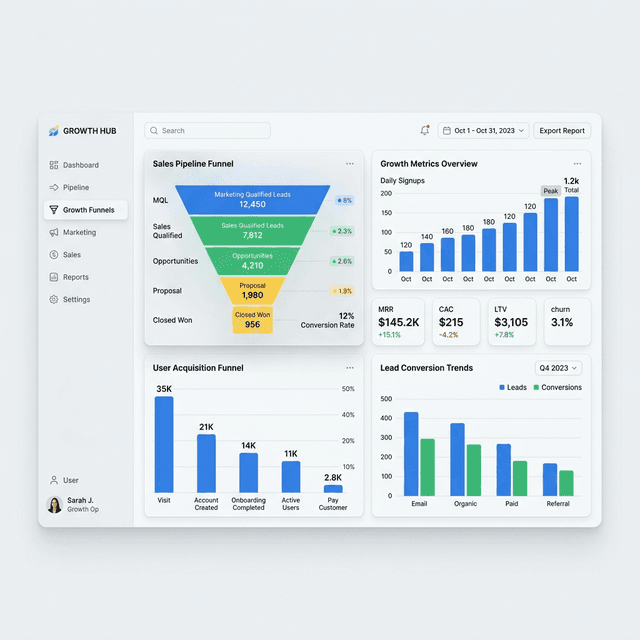
I built a 5-page Power BI dashboard covering the full order base, breaking orders down by country, region, and software module to expose demand patterns that were previously invisible. In parallel, I built a live Excel master tracker connected to current data, so the operational layer stays up to date without manual rebuilds. I then connected historical patterns to forward-looking demand signals - including where new data centers and desalination plants are being planned.

Both tools are in active departmental use: Power BI as the visual layer for presenting order patterns, and the Excel tracker as the department's master order file, updated regularly by the team itself.

Note: Visual is recreated with representative data.

From paper notebooks and scattered Excel sheets to one master dashboard.
Full story: Orders and payments dashboard

When I joined KS Plastics, a lot of the day-to-day business information was spread across different Excel sheets - and before that, in literal pen-and-paper notebooks. Customer details, order history, delivery status, pending payments, and follow-ups were not visible in one place, which made it hard to manage work in a structured way. As the business started growing, this lack of visibility created confusion and made it difficult to stay proactive with clients.

I wanted to bring more discipline into the process, so I manually consolidated the scattered information into one master sheet and built a working dashboard in Excel around it. The dashboard gave us a simple but useful view of active orders, delivery timelines, payment status, and the next actions required for each client. I also made the structure practical enough that someone could update it regularly and the team could actually use it in daily operations.

This gave KS Plastics a much stronger operational base. Instead of reacting late to delivery issues or payment delays, the team could track important items earlier, follow up on time, and manage clients with more confidence. For me, this was one of the first examples of building a simple system that directly improved execution and customer reliability.

7 products launched in ~24 months, revenue grew from ~€1M to €3M+.
Full story: Moving from components to finished products

KS Plastics originally operated mainly as a supplier of plastic components for lighting products. That model worked, but it also placed a limit on growth because the larger and more profitable buyers wanted complete, ready-to-install lighting solutions, not separate parts. Over time, it became clear that if the business wanted to grow meaningfully, it needed to move closer to the end customer and offer finished products instead of staying only at the component level.

I helped drive that transition by first validating whether the demand was real. I spoke to 250+ customers over time to understand what they actually wanted, where their pain points were, and why sourcing multiple parts separately was difficult for them - down to the exact LED wattages, battery capacities, and solar panel sizes the market needed. Once the opportunity was validated, I supported the shift by helping build the vendor network for missing components (with backup suppliers for every link in the chain), contributing to the planning of the in-house setup, and supporting the move toward complete product assembly.

The result was a much bigger strategic shift than just launching a new SKU: 7 products launched in around 24 months, and KS Plastics moved from being seen mainly as a component supplier to targeting more valuable finished-product opportunities - supporting growth from about €1M to over €3M in revenue.

1,500 records migrated, manual work cut ~50%, on-time delivery 95%+.
Full story: Setting up HubSpot as a sales system

The Excel dashboard worked well in the early phase, but as KS Plastics grew, it started becoming a bottleneck. The business had more customers, more leads, more follow-ups, and more opportunities moving at the same time. At that point, Excel was no longer enough for managing a growing sales pipeline, supporting email outreach, or giving the team the visibility needed to scale.

I led the transition from Excel to HubSpot - entirely self-taught. I learned the platform through tutorials, practiced in a sandbox at home, then migrated close to 1,500 records myself, cleaning and standardizing the core fields along the way. I set up the pipeline structure around how our sales actually worked and built the automations that turned the CRM from a database into an engine: scheduled follow-up reminders, quote reminders, reactivation nudges for inactive leads, churn alerts, and festival campaigns with self-built email templates. I then trained my teammates so the system would survive beyond me.

The shift made the sales process much more structured: follow-up became reminder-driven instead of memory-driven, missed leads dropped, manual work fell by around 50%, and on-time delivery improved to over 95%. A single clean source of truth for 1,500 B2B relationships - built up from paper notebooks to a fully automated CRM, entirely in-house.

Fulfillment time cut from 7+ days to about 2 days.
Full story: Faster fulfillment operations

At Walnuts, one of our biggest early problems was that production took too long and had too many dependencies. We were dealing with raw materials, external tailoring, separate printing vendors, and even an outside designer for artwork. This made the process slow, difficult to control, and hard to scale as order volume increased. It also meant that a delay from one person could slow down the entire order.

I worked on redesigning the flow end to end. Instead of continuing with the old raw-material-heavy approach, I shifted the sourcing model toward finished blanks, improved the quality and reliability of printing partners, and removed one major bottleneck by teaching myself CorelDRAW so design work could be done in-house. I also improved coordination between suppliers and printers so the handoffs were cleaner and faster. The focus was to reduce unnecessary steps and make the process more dependable.

The biggest result was speed. Average fulfillment time dropped from more than seven days to around two days. That made the business much easier to run, improved customer experience, and gave us more space to focus on sales and growth instead of constantly firefighting operational issues.

New corporate accounts, including KPMG and Maruti Suzuki.
Full story: Reducing seasonality through corporate clients

Walnuts grew by serving college merchandise orders, but over time we ran into a structural problem: the business was highly seasonal. Orders would rise around college events and festive periods, then slow down sharply in quieter months. That made revenue unstable and made it harder to plan the business with confidence. If we wanted a stronger and more sustainable company, we needed a second customer segment that was less seasonal.

I helped drive the move into corporate clients. We first tried broad cold outreach, but response rates were weak, so we adjusted our approach and focused on better channels. We started attending BNI guest meetings to reach business owners more directly, improved our online presence, built a better website, and created a more professional product catalog that made sense for corporate buyers. As we learned more about that segment, we also expanded into corporate gifting and developed a wider offering that matched what those clients actually wanted.

This made the business much more stable. Instead of depending only on the college cycle, Walnuts built a growing B2B client base alongside its original market - winning accounts such as KPMG and Maruti Suzuki. That reduced seasonality, improved revenue quality, and taught me an important growth lesson: sometimes the best way to grow is not just to sell more to the same customer type, but to redesign the business around a more reliable market.

04

Content & Storytelling

Clear communication through presentations, content, and creative work.

€1,500 Meta campaign · >30% market-penetration growth.
Full story: AI-generated ad campaign (real, paid, measured)

Through a competitive online marketing challenge, my 4-person team ran Nextbike's real paid summer campaign for León, Spain (May-July 2026), working directly with the Leipzig HQ and Barcelona teams - real budget, real accountability.

Drive user activation and account sign-ups in León on €500/month - a mid- and bottom-funnel objective, not just awareness.

We built personas from market research, mapped touchpoints, and mined local reviews for pain points - finding that public buses stop around 10 pm while summer street life continues much later, which became a core ad angle. I produced the ad creative with AI image generation, using map data to make the backdrops authentically León rather than generic stock, plus an AI-generated video ad. We ran the campaign on Meta across Facebook and Instagram, tracked cost per acquisition per channel, and reallocated budget to Instagram based on measured ROI.

May-June results: market penetration grew by more than 30% and app downloads by around 18%, on a total spend of €1,500 - a complete funnel campaign from persona research through AI-generated creative to channel-level ROI optimization, with a real client.

Turned multi-country research into one decision-ready client deck.
Full story: Executive presentation

In a consulting project with Bundesdruckerei, our team created a large amount of research across many countries and opportunities. The challenge was to turn that work into one clear story for senior stakeholders.

Build a presentation that simplifies the research, explains the logic behind the recommendations, and helps the client decide what to do next.

I took a lead role in shaping the final presentation. I helped organize the story, simplify the slides, connect the research to the recommendations, and make the deck easy to follow for senior stakeholders. I also co-led the final presentation delivery to the client team.

The result was a clear, decision-ready presentation that brought together complex research, country priorities, and market potential in a way that the client could act on.

Materials supported growth from 17 to 22 adopting markets.
Full story: Consulting presentation content

At BMW, consultants needed updated presentation content that matched current market realities and was practical enough to use across different regions.

Improve the content so it is easier to present, more useful for consultants, and better connected to real customer and dealer needs.

I worked on consulting materials for BMW programs by updating slide content, improving the overall flow, and making the story more practical and easier to use. This included dealer-facing sales arguments and objection handling (range anxiety, EV battery health), bringing in market insights and dealer feedback, and making the slides more modern and action-oriented.

The final material became easier for consultants to use in real work and stronger as a communication tool across international teams - the relaunched B2B program these materials supported grew from 17 to 22 adopting markets between 2024 and 2025.

Note: Visuals have been recreated to avoid showing internal BMW slides.

Grew HHL VCC's LinkedIn from under 600 to over 1,400 followers.
Full story: LinkedIn content system

When I joined HHL Venture Capital Club as Head of Marketing, the club had low visibility on LinkedIn and was not the most followed student club at HHL.

Build a stronger content system that increases visibility, improves consistency, and helps the page grow over time.

I created a regular content rhythm, designed visuals in Canva, posted updates on events and venture capital topics, and used performance insights to improve what we shared. With a €100 budget from the school, I also ran a targeted LinkedIn ad for our VCC Cup event that reached around 35,000 people and drove registrations from multiple universities.

The page grew from under 600 followers to over 1,400 and became the most followed student club page at HHL.

11k+ subscribers, 3M+ total views, grown through SEO and retention data.
Full story: YouTube channel growth

I wanted a place where I could learn what makes content work in the real world, not just in theory.

Build an audience by creating videos people want to click on, watch, and come back to.

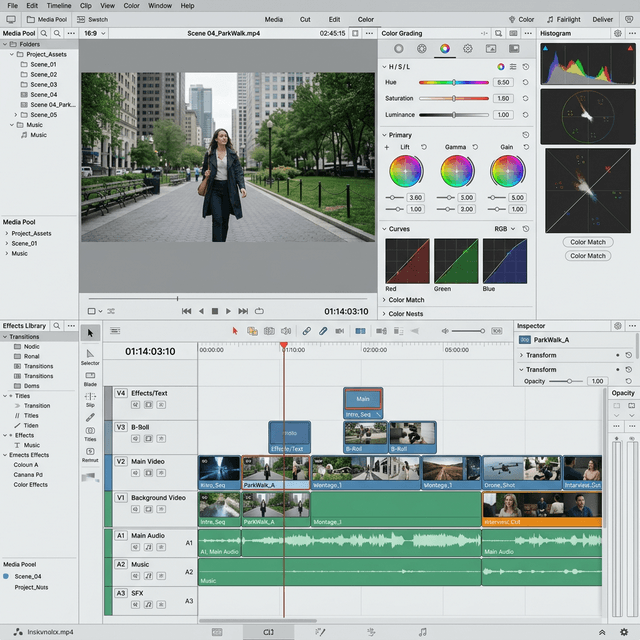
I worked on the full content process myself: choosing topics through keyword research, improving titles, thumbnails, and tags, editing videos, and using retention and audience analytics to decide what to make next - down to upload timing and subtitles based on where viewers actually came from. I also ran YouTube ad campaigns and paid brand sponsorships on the channel.

The channel grew to 11k+ subscribers and 3M+ total views, giving me hands-on experience in content, audience attention, SEO, and creative iteration.

Live optimization project with LEGO representatives.
Full story: SEO for LEGO

In 2022, as part of Kraftshala's brand management program, I worked on a live project with LEGO - collaborating directly with real LEGO representatives, not a simulated case.

Improve the search performance and technical health of one of LEGO's web pages.

I audited the page's SEO fundamentals and loading speed, identified the concrete issues affecting discoverability and performance, and worked with the LEGO team on the recommended fixes.

Hands-on SEO experience on a globally recognized brand's real web property - a method I've since applied to my own YouTube channel, LinkedIn profile, and this website (which is also optimized for Generative Engine Optimization, so AI search engines can read it too).

A polished AI-generated concept piece, not an official BMW campaign.
Full story: AI ad concept

I wanted to show that I can use AI not just for research or productivity, but also for creative work that feels polished and brand-aware.

Create an ad concept that looks strong enough to feel like a real campaign asset, not just an AI experiment.

I created a BMW-themed ad concept using AI tools for visual generation and then refined the output through layout, message selection, and overall presentation. The focus was on combining creativity with control so the final output still felt intentional and usable.

The result was a portfolio-ready creative piece - and the same skills later produced the real, paid AI-generated campaign for Nextbike shown above.

Note: This is a creative concept, not an official BMW campaign.

A live product website built end to end: structure, copy, visuals.
Full story: Product website storytelling

I wanted to build something real that shows how storytelling, visuals, and product presentation come together in one place.

So, I created a product website that feels clear, modern, and intentional - not like a generic template.

I built the Overclock website around product storytelling: deciding the structure, shaping the copy, thinking through the visual flow, and making sure the site feels like a real brand experience. The goal was to show both communication skill and execution.

The final website became a live example of how I think about messaging, visuals, and product presentation together.


Free prompts

AI image prompts

Ten poster prompts with the exact images they produced. Click any image, copy the full prompt, change the details to yours.

Open the prompt library
After Rain, Luxury fragrance campaignSolara, Surreal travel posterThe Last Tree in the City, Environmental awareness poster
Stack & tooling

Toolbox

Tools I use to turn research, strategy, and ideas into shipped work.

AI & Automation

  • Document-grounded assistants shipped at BMW and Siemens Energy.
  • Used to build and ship real products, including Wattlas and this website.
  • Power Automate, n8n, Make, and Google Opal pipelines that remove manual work.
  • Open-source LLMs run offline via Docker, plus vision-model fine-tuning.
  • Used daily for research, synthesis, drafting, and analysis.
  • Where I first learned RAG hands-on before implementing it at BMW.

Strategy & Analytics

  • Competitor, market-sizing, and market-entry research at Siemens Energy and Bundesdruckerei.
  • Messy analysis turned into one-pagers, decks, and leadership-ready recommendations.
  • A 5-page Power BI dashboard on 30 years of Siemens Energy order data.
  • Executive decks, workshops, and final presentations.
  • The document and knowledge structure behind internal AI assistants.

Growth & Marketing

  • KS Plastics' paid acquisition built from zero and scaled ~40x on measured ROI.
  • Nextbike's real €1,500 Meta campaign and HHL VCC's LinkedIn ads.
  • A live SEO project with LEGO, plus SEO and GEO for this website.
  • 1,500 records migrated and follow-up automations that cut manual work ~50%.
  • Tracking work and cross-functional collaboration at BMW and Bundesdruckerei.

Design & Content

  • The real ad creative for Nextbike's paid campaign, localized to León.
  • Posters, apparel design files, and ad creatives at Walnuts and KS Plastics.
  • Wireframes, presentations, email templates, and quick visual assets.
  • Editing for a YouTube channel with 11k+ subscribers and 3M+ views.
Contact

Let’s talk

Working on something where AI, product, or go-to-market meet? I’d be happy to chat.

at.adityagupta@gmail.com

Include: role/team + what you want solved.